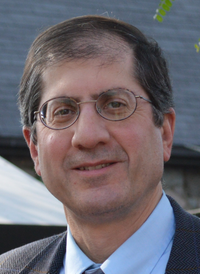
From expanded screening efforts to breakthroughs in precision medicine and immunotherapy, lung cancer care is evolving rapidly. Dr. Greg Kalemkerian discusses what’s driving these advances, how treatment decisions are becoming more personalized, and what the future holds for improving outcomes and quality of life.
Transcript
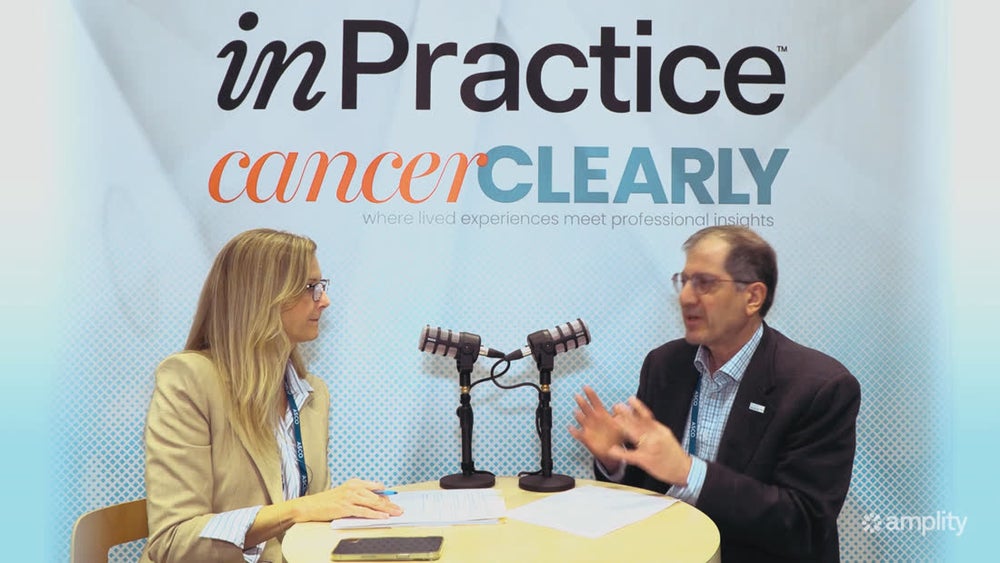
Kristin: OK, it’s Kristin Siyahian here with the Cancer Clearly podcast. And I am so happy to welcome my next guest to the recording to my podcast booth. I am joined by Dr Greg Kalemkerian. Hi, Doctor Kalemkerian.
Dr Kalemkerian: Hi.
Kristin: It’s so good to see you again.
Dr Kalemkerian: Good to see you again.
Kristin: Yes, we we have with us a clinical professor of internal medicine, the associate division chief of faculty development. You are the director of the Fellows program in Hem/Onc, too at University of Michigan. Yeah, and that’s where I wanted to start today. You know, you’re really playing a major role in shaping the next generation of oncologists coming out of University of Michigan. And we’re at a time in cancer care where it’s more and more complex. We’ve got more and more therapies. So do you want to talk a little bit about how that’s happening in, in your fellowship program and how you’re what you’re looking for in the next generation of oncologists?
Dr Kalemkerian: Yeah, I think it’s becoming much more, much more difficult to train people nowadays. You mentioned the explosion of just the number of options, number of drugs available and nobody can get their heads around all of them anymore. You know, you have drugs now being approved for quite 3% of non small cell lung cancers, you know, for these very small groups of, of, of patients. And it’s just very hard to learn and understand all of that.
So I think what we need to focus on and what we try to focus on is more of the conceptual basis of things they have to study. They have to read up on the patients that they see in order to know those details of the various drugs. They see that in our clinics. But from the standpoint of trying to train them with say, didactic lectures or interactive lectures, I think it’s more of the conceptual aspects of it, the biological underpinnings of these newer treatments.
You know, you’d like to think that people coming through medical school and undergrad have some understanding of the science of cancer, but that’s an assumption. They don’t always have that when they get the fellowship. And even if they did, it was number of years ago when they went through first year of medical school. So it’s been a while. So getting them to understand why these drugs are being developed, what they’re targeting, what the mechanisms are, especially if they want to go into academics where they’re going to be helping to design these trials. I think knowing that as a basic conceptual thing is, is very important.
And then from the patient care standpoint, understanding the concepts which have not changed, you know, quality of life, performance status, how that impacts what you can do, you know, thinking of what is the optimal treatment given the optimal patient. That’s what NCCN gives you, right? That can be, you can look that up. You can sort of figure it out from NCCN most of the time, not all of the time, but that is out there. That’s learnable in a very didactic sense.
But how do you apply that to the person sitting in the room with you is really, I think the art that we’re trying to get through to them. And that hasn’t changed in in all these years that I’ve been doing this. So learning how to adjust the optimal treatment to the patient that you’re looking at in order to give them their personalized optimal treatment, which is not necessarily the same what’s in the guidelines. So we try to focus on those aspects of training, the things that we can train them how to think about cancer care and how to understand cancer care.
Where’s the details of the drug? Things are moving so fast now. You know the drug I talk about this year, by the time they graduate in three years, it’s an obsolete drug or it’s not being used anymore as first line treatment. So those things change, but the underlying concepts are stable.
Kristin: It’s certainly a different day than when you and I started in this business years, years ago.
Dr Kalemkerian: Yeah. I tell the fellows that when I took my first boards, I think there were 30 drugs, maybe 35 drugs, and they were used for everything, right. Cytoxan, it was used for everything, Right.
Kristin: Right.
Dr Kalemkerian: And now it’s just so, so niche for everything that it’s just hard to get your head around all of it.
Kristin: Yeah, that’s true. So your specialty is in lung cancer.
Dr Kalemkerian: Yes.
Kristin: And I couldn’t help but notice in the last couple years, the Ad Council has developed some public service announcements campaigns around if you have ever smoked, go get screened, right? So I just was curious, like, what do you think about that? How does that influence public awareness? Or do we see more people getting screened? And as a follow up to that, what screening technologies or guidelines are making early detection more effective today?
Dr Kalemkerian: Yeah, No, I agree that early detection is really, really key. Prevention is really key, but unfortunately we’re not really seeing a major uptick in lung cancer screening now, not in the United States, despite the evidence that suggests the benefit. There are just a number of negative things out there that the primary care docs and others like the focus on; the false positive rate is still relatively high. Even when we apply the Lung-RADS criteria that help to sort through that whole issue, it’s still a relatively high number. And then there’s some issues, statistical issues that have been raised about overall improvements in mortality rather than lung cancer specific mortality that people might focus on.
But I do think that the screening needs to improve and continue to improve. You know, in the United States we’re screening about 5 to 10% of people who are eligible. And that’s based on the current criteria.
I’m not terribly much in favor of expanding the screening criteria. They already were expanded a couple of years ago in the United States to really capture more of the minority population and the female population that is more susceptible with a lower risk, a lower exposure to tobacco. But we’re still not capturing those people. I think that’s what we need to capture is the people who are eligible rather than saying, OK, everybody who’s even in never smokers in Japan, they’re doing a lot of work with never smokers. I think you start expanding there, we’re going to start seeing a lot of resource utilization without a lot of yield.
Kristin: You hear a lot about never smokers being diagnosed with lung cancer. Any comment there? Or I mean, how are we discovering these folks, right? I mean, is there presenting later stages?
Dr Kalemkerian: It’s out there. They’re presenting at later stages because nobody’s thinking of it early on, right? Is it really increasing by a tremendous amount? That, that that’s hard to gain from the data that we have.
You know, we have SEER data which doesn’t have smoking history in it. And that’s our biggest database in the United States. So it’s hard to glean that, that, that, that rate is really increasing. The proportional incidence is increasing. So, and that’s really because the, the smoking prevalence has declined so much over the last 40, 50 years, right?
Kristin: No question.
Dr Kalemkerian: So with that declining, yes, the proportion of people who are non-smokers is probably increasing, but is the absolute incidence in non-smokers increasing? We’re also paying more attention to it now because we have treatments that are relatively specific for them, right? The targeted therapies, EGFR, ALK, ROS1.
Kristin: Game changer. Complete game changer.
Dr Kalemkerian: They are game changer. So now we know, are you a smoker? Are you a non-smoker? So we’re tracking that better than we used to. The nonsmokers tend to go to the major institutions, the ones who are publishing these papers. So as their proportion of nonsmokers clearly has gone up.
Kristin: Yeah.
Dr Kalemkerian: But has that happened out in the vast majority of the country? It’s a little hard to tell.
Kristin: So just in terms of early screening, there’s data being released here from the Galleri folks. Through the Galleri test. You hear about Cancer Guard where a blood draw and you can screen for, you know, 50 different cancers that we don’t routinely screen for now. Any thoughts there and how that’s going to impact lung, lung cancer folks?
Dr Kalemkerian: Well, I, I think those are very nice research studies and I think something that needs to be explored. And I’m, I’m not, I can’t remember right now which one it was that had a negative trial right coming out of the UK a couple of months ago. The CTDNA type of trial that was, was negative did not improve, improve ultimate outcomes.
And the issue is, can you really find them early? I mean, we know from doing CTDNA in, in the lung cancer patients, particularly the targeted therapy patients like the EGFR patient, that when they have a low burden of disease, we usually don’t find anything. Even when I can see it on the CAT scan what they have, you know, four or five, one milli 1 centimeter nodules in their lungs, CTDNA is negative and we don’t find it. So with the question is can you really find early stage disease with those tests? And the sensitivity is going to have to clearly keep improving in order to do that.
But then you’re going to run into issues of finding people where you got a positive test on your blood and you scan them up the wazoo and you can’t find anything. Then what do you do? You keep scanning them every few months. Where do you scan? How specific are these for a specific organ? What are we really looking for here? What tests do we do to follow up on it? All of that needs to be worked out.
I think it’s clearly something, as I mentioned earlier, early detection I think is the key. You know, I’ve been doing therapeutic trials in advanced stage non small cell lung cancer for 35 years now. And I can tell you I don’t think that’s going to be the answer to lung cancer. I think the answer to lung cancer is clearly primary prevention, you know, getting rid of tobacco use and then it’ll become a relatively rare disease. And the second one is early detection for those people who have had significant exposures, right? And that’s going to up the game a little bit.
So I think those are very good things to pursue. I don’t think they’re ready for prime time.
Kristin: And that early detection is best accomplished through traditional screening methods, we already have.
Dr Kalemkerian: Currently, I think that’s the best we have. Yes.
Kristin: So you mentioned your precision targeted medicines, your precision medicine. What do you wish more people, especially in community setting, what do you wish more people knew, clinicians and patients, just about biomarker testing, its utility?
Dr Kalemkerian: Yeah. You know, it’s hard for someone like me who’s been in the field for a long time to really comprehend that non small cell lung cancer leads the way in targeted therapy in all of oncology. You know, we have more targeted therapies there than we do in leukemias. So nobody would have predicted that 20, 30 years ago. But that is the fact. And that this molecular testing, particularly the NGS, the PDL 1 testing is important early on. You really need to get that done early on, at least in the adenocarcinomas now in almost all stages.
I can say if you really want to save money, don’t do the stage 1As because there’s no benefit to doing any adjuvant therapy in those patients. But every other stage, adenocarcinomas down the line, and they need to have NGS and PDL, one done early on the course.
The second thing is when you look at, say, squamous cell carcinomas and lung cancer, we’re going to get there. Some people are arguing that we should be doing full NGS on those patients. I’m not quite as sold on that. I think we do find a few KRAS mutations and things like that, but it’s a very small percentage where it’s actually beneficial. But PDL 1 testing definitely needs to be done. So PDL 1 testing really should become reflex in lung cancer, similar to the way HER2 is in breast cancer. It’s an immunohistochemistry test. It’s easy to do. Pathologist should just do it.
Kristin: What do you do about low PDL1? Yeah, when you barely there, What now what do we do?
Dr Kalemkerian: Well, it depends on your stage. So for advanced stage, well chemo, immunotherapy demonstrated a benefit in the low PDL1 as well. What that’s telling us is PDL1 is not a good biomarker, right. If you don’t have the target and yet you’re responding to the drug that’s targeting it, that tells you it’s not a good target, it’s not a good biomarker for that target. And we know that, but it’s the best we have right now. So we use it for that.
You can use it in the earlier stages to kind of help you determine based on risk benefit ratio to determine that benefit side of the equation. And somebody who might be borderline, they have this history of colitis, but you don’t know what kind of colitis. And you know their PDL1 is 0 and they have stage 3 non small cell. Well, maybe I won’t use nivolumab, you know, depending on their, the, the particular situation.
Kristin: Talk to me a little bit about resistance, treatment sequencing. How are you handling that with these patients?
Dr Kalemkerian: Yeah, so it’s become challenging. You know, we have a lot of options in the first line. The thing that people don’t talk a lot about is we actually still have very few options once you get beyond first line. And the, the, the big question I think is that hasn’t been answered fully in a lot of the clinical trials is do we have to throw everything at everybody upfront or do we sequence and by sequencing string people out further, particularly in the stage 4 situation site in the non-curable situation.
And I say non-curable with little quotes around it, because nowadays I do have people who are out, you know, 6, 7, 8, 9 years, 10 years who have not had progression of their disease with stage 4, right? It’s a small group of people. I don’t think it’s as big as the trial suggests is, but it’s there. We do have those people.
So, you know, again, having been in the field for a long time, sometimes it jades you a little bit. So going back to the, the 90s, right, the 80s and 90s, what we did was everybody thought because, you know, MOP and CHOP for lymphomas and then BVP for testicular cancer. If you just found the right combination of things, you’d get over the hump in all cancer, small cell lung cancer, which I’ve made my career on, right. Everybody thought it was going to be the next curable disease. If we just found the right combination of drugs back in the in the 1980s and early 90s and we tried for 30-40 years and there was there’s no combination of drugs that’s going to get people over that, over that hump or at least not cytotoxic drugs.
And now I think we’re swinging back. So in the 1990s we learned that, you know, for non small cell lung cancer, 2 drugs were as good as three drugs or 4 drugs and we’re better than one drug. So we settled on that. Now we’re starting to get back to where we have these different mechanisms. So we’re throwing all these things together at one time. Unless you’re going to get over the hump and, and, and cure people, I’m not sure that the quality of life issues involved in doing that are worth it, especially when it’s not biologically rational.
Now, if you have a biological rationale for combining drugs where you think there’s going to be some amplification of the effect, then you can see it. If it’s an additive effect, Well, if you do it sequentially and string people out rather than throwing everything I’m at them right at the front, maybe people will actually do better.
I’m a very firm believer, one of the, I think the main things I’ve learned in, in the years I’ve been doing this is that quality of life drives your quantity of life. So if you keep people upright, if you keep them going, if you keep them doing the things they want to do, they will do better for longer, right? You have to have some treatment that’s going to control the cancer, yes. But you don’t have to beat people with our treatments. And I think you can string people along. So how many combinations of things that we need upfront because you don’t have a lot of other options beyond that.
Kristin: So I just interviewed 2 lung cancer survivors, one of whom happens to be a physician. Both of them were diagnosed at stage 4. Neither one ever had chemotherapy because we’re in this advent of all these new drugs. But with all those new drugs, it brings about a whole new toxicity profile, right? All new, all new ways to deal or mitigate those side effects. So do you have a lot of experience there, too? Are you teaching your fellows about this or how are you consulting with people outside the specialty?
Dr Kalemkerian: Yeah, I mean, managing side effects. You know, one of the reasons I went into oncology is because I viewed it as somewhat of the ultimate in internal medicine. You know, I think ICU care and oncology, because they covered a whole gamut, right? It’s a whole textbook of medicine, both from the disease standpoint and from the complication of treatments standpoint, right? You covered a whole body.
But quite honestly, some of the newer treatments have taken it a little too far. You know, I never really wanted to be an endocrinologist. I didn’t want to be a dermatologist, certainly. I don’t want to be a nephrologist, you know, but now I’m all of those things and trying to get your colleagues who aren’t in oncology, you know, we’re, we’re making head roads right now, we have in our institution, we have cardio oncology, we have cardio, we have nephro-oncology, right. So we have people who are interested in this. We have a very good people who are doing working with us on the pneumonitis, right. But it’s not easy to find in all the specialties your go to person all the time, right.
Kristin: I was wondering about that, it’s just a rheumatologist who wants to come in and deal with rashes in a in a cancer patient. I don’t know.
Dr Kalemkerian: And they there are things that have to be dealt with now. It can’t be, yeah, I can see them in six months. That doesn’t help me, that doesn’t help them.
You know. So it’s not like the standard practice that we have. It’s got to be in real time in order to mitigate these things quickly. Because the thing you’ll learn, especially with the immunotherapies, is if you don’t get on it now, that patient is in big trouble.
Kristin: And really get ahead of it right before it starts.
Dr Kalemkerian: You really have to get, get in on it early. If you think about treating this toxicity, you better do it now because if it ramps up, it’s going to be very hard to reverse and they’re going to have irreversible problems even if it gets somewhat better.
Kristin: Yeah, you touched on this a bit earlier with screening guidelines, but talk a little bit about just social disparities where the gaps are, especially when it comes to lung cancer screenings.
Dr Kalemkerian: Yeah, I mean, in lung cancer screening, actually, I, I think that I’m not aware of a specific racial socioeconomic disparity, though I imagine they’re there. I know when you erase that, so I can point out one of my colleagues, Dr Ramnath does a lot of work with the VA and the VA has a major screening effort ongoing throughout the country and that has made major improvements in the number of people who are screened.
So when you and the VA is a, a very equitable institution, right, anybody who’s been a veteran can, can participate regardless of socioeconomics and everything else to some degree. And once you eliminate that, people are getting screened.
Kristin: This really speaks to the concept of navigation, which is a topic near and dear to my heart. So that, that’s, that’s community outreach and, and a navigation capacity bringing those patients in. That’s great work.
Dr Kalemkerian: And, and that, that does help, you know, and it’s been shown that, yes, when you go out to churches and you go out to other institutions, men’s clubs and those kind of things, yes, you can convince people that doing screening is a reasonable thing to do. It’s been shown in other diseases as well and can be applied to lung cancer.
Kristin: OK, So what, what research are we excited about coming out of ASCO this year?
Dr Kalemkerian: In lung cancer?
Kristin: In lung cancer. Anything that is practice changing, anything people could use on Monday morning or maybe in the next 5 to 10 years, you know that we could build on?
Dr Kalemkerian: Looking at what is practice affirming maybe a little bit more than practice changing. We’ll see when the plenary session comes out. There may be a couple of practice changing things. I haven’t seen the data obviously at this point. And of course we’d have to get, you know, FDA approvals and all that to, to move that, that that bar forward. You know, it’s really been a lot of fine tuning, a lot of next generation kind of kind of work in order to determine what is the best avenue to go for people.
I’m very buoyed here at this meeting by more people seem to be focusing on what you talked about earlier, which is quality of life. More people are asking the question of, I just came from a meeting and Dr Palini did a very good job of pointing out, yeah, you can add immunotherapy to KRAS targeted therapy, but do you really have to? Is it worth the five fold increase in toxicity that you see in that situation for one particular drug that looks quite promising for KRAS, did you have to do that in some drugs? Maybe you do have to do that because they aren’t quite as potent. But if we get the right inhibitor, do we really need to throw that on or can we sequence it? And by sequencing you hopefully, you know, making toxicity more, more balanced over time so that that focus on what can we do?
You know, a lot of clinical trials now are being done kind of to get the drug approved rather than the answer a clinical question. And you can tell that by looking at the controls, right? When they lower the bar on the control, you know PDL1 low patients using immunotherapy alone as your control rather than chemoimmuno, you’re clearly targeting to make your experimental arm look better. When you’re doing that, we know what the control is going to look like. You’re trying to amplify your effect of your drug. That’s not answering our clinical question because most of us don’t use immunotherapy alone as our initial one, so you still have the question open as far as what is the best treatment.
If we look at stage 4 non small cell lung cancer, we have lists of drugs and combinations, immunotherapy alone, chemoimmuno, immuno-immuno combinations, multiple chemo, immuno combinations. All of them have beaten chemotherapy, but none of them have been compared to each other. So we’re left with trying to do cross trial comparisons, which one might be better in this population, that population and trying to evaluate toxicity cross trials and based on experience, right? Which one is the least toxic even though they all look pretty much the same and using that one. So we all have our own way of analyzing that data and coming up with that solution, if you will. It’s great to have options, but sometimes when you walk into the grocery store, you wish there were only like 5 salad dressings instead of 300, right? So we’re, we’re a little and, and you never complain about options. Options are great. It’s good to have things you can pick for individual patients based on their comorbidities and toxicities and which one might fit them best.
Well, we need a few more studies to try and evaluate what is the best treatment. Not does this thing work in this disease, but is it any better or equivalent or how does it with the other, the other things that’s hard to do when things are moving so fast.
Kristin: So true.
Dr Kalemkerian: Because the control does change by the time you finish your trial frequently. And I understand that.
Kristin: Last question for you, what’s the buzzword this year at ASCO? What are you hearing everywhere?
Dr Kalemkerian: I think quality is, is, is something that I’m hearing quite a bit on, especially quality of life and that that’s a good thing. And I’m not talking about quality of life studies, which I think are really a very, very, very rough way of analyzing things. But some more people are mentioning that, yes, grade 2 diarrhea is a huge problem for patients. We don’t have to just focus on grade 3, right?
So people are beginning to recognize, and it’s because we’re ramping up the types of treatments that we’re doing on people again, that these things are becoming much more, much more problematic, you know, adding two EGFR inhibitors together. Well, we know what that’s going to do to people toxicity wise. The question is, is it worth it from the efficacy standpoint to have that toxicity when you’re not getting rid of the cancer? If you’re getting rid of the cancer, you might, you know, obviously accept more and more toxicity. And we’ve learned that patients are speaking with their feet, right?
So EGFR inhibitors extraordinarily quote unquote tolerable and manageable in the stage 4 situation when a patient is told if you don’t do this, you’re going to die, they’ll take it and they’ll have paronychia and diarrhea and other issues that they’ll get along with. But if you tell somebody, well, you have a 50% chance of being cured with your surgery, but I want you to take this drug for three years. Well, that ain’t as tolerable. When they start having paronychia and diarrhea and things that affect their quality of life, you know, they want to be a cancer survivor. They don’t want to be feeling like they’re sick all the time. So balancing those things with the degree of efficacy versus that toxicity and how that affects quality of life, especially if we are going to turn this into a chronic disease as people are talking about.
I think we’re getting there in very small subsets. I don’t think we’re quite there yet, but I do have patients who are out, you know, I have a couple people who are out almost 20 years now, right, some with targeted therapy, some not. And so obviously not immunotherapy that far out, but we do have people at that cutting edge of immunotherapy from 2016, seventeen when we started using it. We’re still going. It’s a small group of people on the unspoken truth is that vast majority of our patients don’t quite benefit much from these treatments and quite a few people still do quite poorly. And we have to focus on quality of life. So learning who these drugs work in and more importantly maybe who they don’t work in so that we don’t have them suffer from any toxicities when we know there’s not going to be a payoff on the back end.
So we got a lot of work to do. I think, you know, the generation that I come from a lot of people in the field beyond, you know, any one individual’s effort has really raised the bar and, and improve the outcomes. And a lot of the younger people don’t even realize how dismal things were 30 years ago or 20 years ago even. But we still have a very long way to go. So there’s a lot of work to be done.
Kristin: Well, I love the concept of quality of life. You’re doing right by your patients. And that’s what this is all about. OK. Thank you for joining me today.
Dr Kalemkerian: Very good. Thank you, Kristin, appreciate the opportunity.