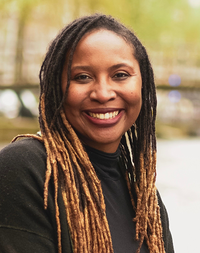
After her lung cancer diagnosis, Brandi Bryant turned her experience into a powerful voice for advocacy, education, and change. She shares her journey, the critical importance of biomarker testing, the emotional realities patients face, and what still needs to be said (and heard) in cancer care.
Welcome to Cancer, Clearly, a podcast about the cancer experience told from every angle.
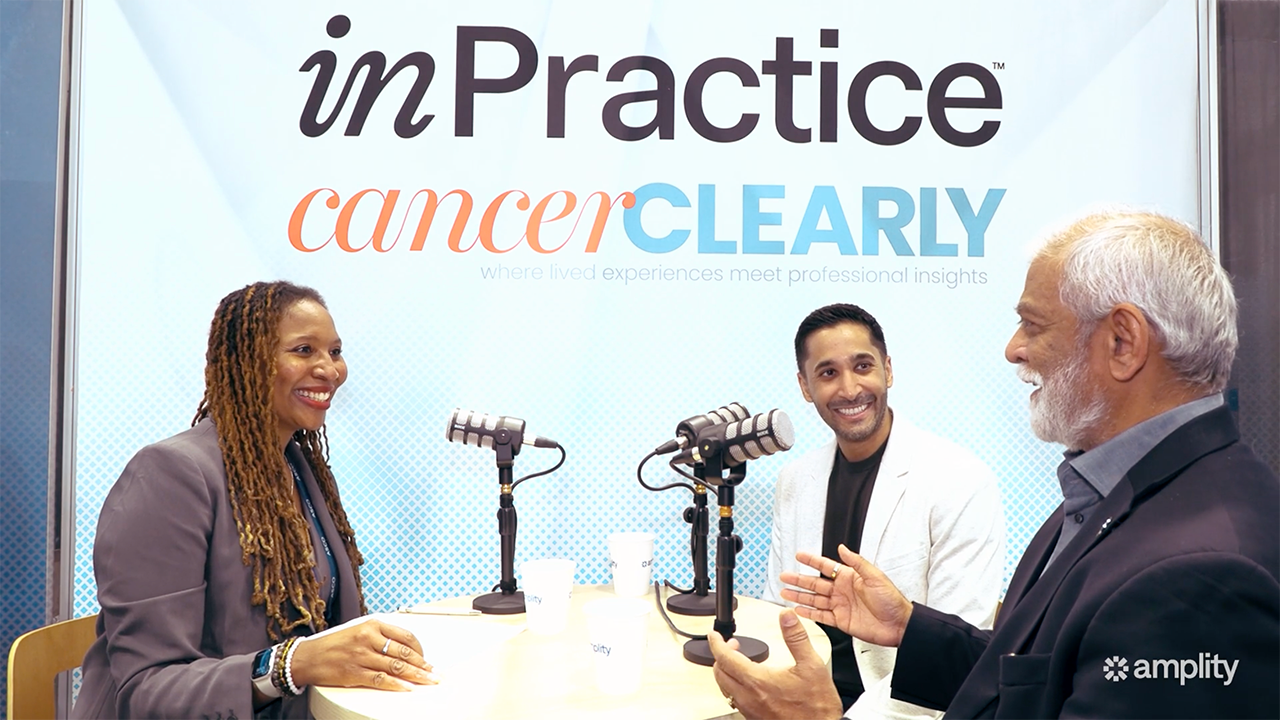
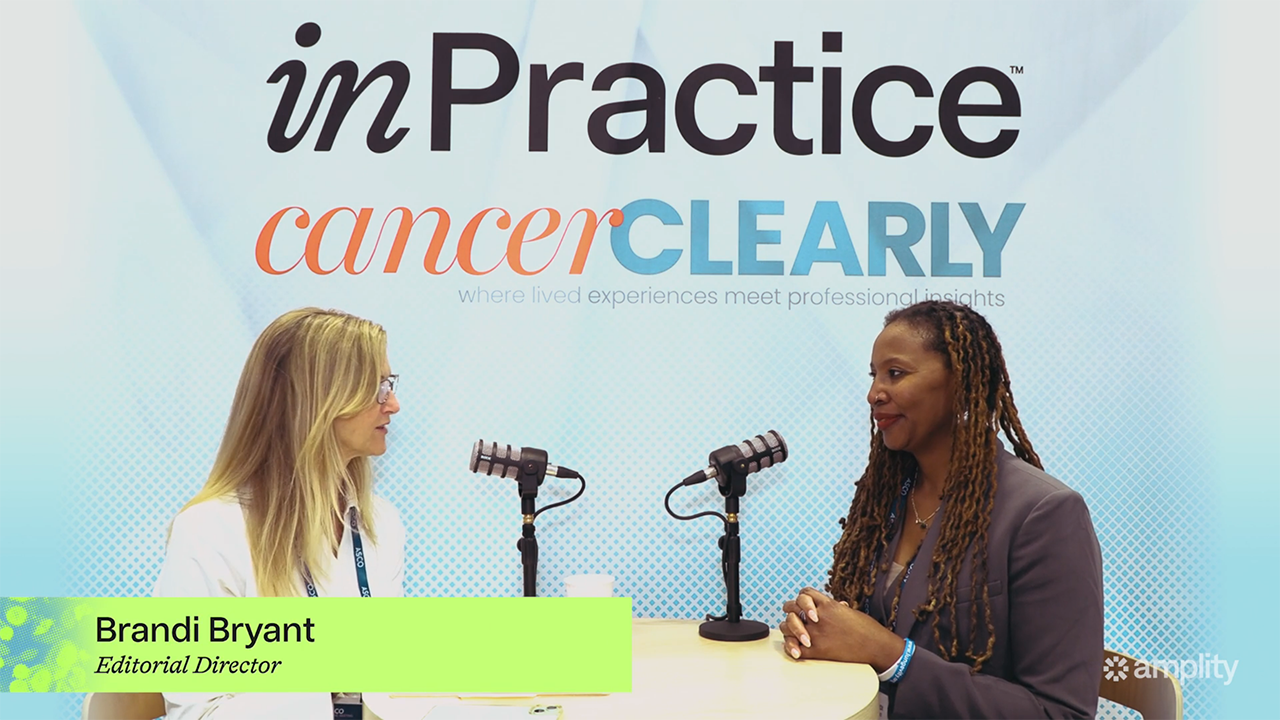
Kristin: Hi, it’s Kristin Siyahian back here in the Cancer, Clearly booth at ASCO 2026, and I’m so excited for this next interview. I’m here with my friend and colleague, Brandi Bryant. Brandi is Editorial Director for our newly launched media platform called In Practice, designed for community oncologists.
Today we’ll talk a little bit about that, but we also really want to feature that Brandi is a lung cancer survivor herself. More importantly, she’s an advocate for other patients in this space. So welcome, Brandi.
Brandi: Thank you, Kristin. So happy to be here.
Kristin: Very good to see you. So, you know, I highly doubt you planned on being an advocate.
Kristin: So, this wasn’t necessarily the life you imagined for yourself before your diagnosis, but I was hoping what you could do for us is just share a little bit about your diagnosis story and what led you down this path of advocacy.
Brandi: Yeah. Advocacy was not on my vision board of life. However, I was unfortunately diagnosed with advanced stage lung cancer at 39 years old after just experiencing some shortness of breath.
I have gone through two phases of treatment, including my first one, which was chemo and radiation. I progressed during that and have been on targeted therapy now for eight years, and I’ve been very, very fortunate that the targeted therapy has worked amazingly well. Even though there are side effects, they’re manageable, and I’ve been no evidence of disease.
Kristin: So, tell us a little bit more about that diagnosis. I mean, you were very young with that diagnosis, so did they know right away?
Brandi: Not a simple diagnosis because of course I was only 39. I had no risk factors for lung cancer, so they thought maybe I had pneumonia.
I was put on antibiotics for weeks, had a follow-up X-ray. Oh, something is still there. And, you know, it took referrals to a pulmonologist. I was actually walking to those appointments because I felt well enough to walk, right? I only had shortness of breath when I was talking, not when I was doing exercise.
Kristin: Interesting.
Brandi: I didn’t have a cough that was bothering me a lot. So, it was a real shock when they finally, about a month… Well, it was actually about three months after I first alerted my primary care physician that something is wrong before I got the diagnosis of lung cancer.
Kristin: Total shock.
Brandi: Absolutely. Total shock.
Kristin: You’ve been very outspoken about biomarker testing, and that was part of your treatment journey as well. Do you want to share a little bit about that?
Brandi: Biomarker testing is what has saved my life. Biomarker testing is the only reason that I’m here. So, when I was initially diagnosed, of course I get this shocking news, “You have lung cancer.”
But that oncologist is telling me, “But we’ve sent your tumor off for testing.” It’s all kind of going over my head. But as I learn more about my diagnosis and the treatment options, I learned that this biomarker can really make a difference in my treatment and I was not initially eligible for it. At that time, the guidelines were different, so I did have to do chemotherapy and radiation at stage 3B, but once I reached stage 4, I was eligible for targeted therapy, and it made all the difference.
Just me even knowing that I needed a biomarker, and that biomarker was critical for the change of my treatment and my ability to live life.
Kristin: Incredible. Truly incredible. And, if I remember correctly, you’re ALK-positive.
Brandi: I am ALK-positive. I’m part of the ALKies gang.
Kristin: So, you know, another thing you have focused on is just the emotional side of a cancer diagnosis, especially around parenting, mental health. Can you talk a little bit about that, too, and what you want clinicians to understand about the emotional side of a diagnosis?
Brandi: Yeah, I want them to understand that it’s where it’s affecting the whole family, and it’s not just my diagnosis.
It’s my mother’s diagnosis. It’s my children’s diagnosis because everyone is impacted when someone is sick in the family. So, it was important to me for my kids to have therapy, for me to have therapy to kind of like deal with this big life-changing event because we don’t know what’s going to happen.
I’m very blessed, very fortunate that I’ve done well, but I wanted my family to be prepared to have someone to talk to should things change, or just even with the stress of knowing that this is something that weighs in the back of their minds. We all need to know how to be able to handle it and have someone to talk to.
Kristin: So, what advice would you give to a patient who’s struggling with her mental health, like in this moment?
Brandi: You know what I did not realize? That palliative care actually has therapy available. So, I utilize that at my cancer center because as we all know, insurances can be complicated whenever getting things covered.
But if you are a patient, you can go and ask your palliative care for therapy, and I’ve used that therapy, and it’s made such a huge difference that you’re able to just have someone who you can talk to who has experience with cancer patients, and that makes a difference than just… You know, it’s also good to have a regular therapist if you do, but having one that knows the journey of a cancer patient is critical.
And also, there are groups for children who have parents who are diagnosed with cancer, and I was fortunate enough to be able to look into getting that. I even had a program started at my cancer center because they didn’t have one for kids, so I had that started there, and my kids are now even volunteering for other kids.
Kristin: That’s so special.
Brandi: So, it’s like a full circle family give back, you know? They’re their own little advocates.
Kristin: That is great advice. I had a dear friend who was diagnosed with breast cancer, and she was attempting to find a therapist, but not a lot of therapists understand the journey of a person with cancer.
So, using that palliative care resource, that is out of everything you talk about- It’s a gem. It’s like a hidden gem. Pearl of wisdom there by Brandi. I love it.
Kristin: One other area you advocate pretty strongly for is access to care, especially in rural communities.
I believe you come from a rural community, in your background. So, let’s discuss that a little bit. What are the biggest disparities you’re seeing today, and how important is access to care? Obviously important. And what are the challenges? What’s going to make it better to get patients there? Can’t get better unless you can get there.
Brandi: Yes, exactly. I’ve got to give a shout-out to Gary, Oklahoma, population 2,000. I’m from a very rural area who had a clinic, and I don’t even think we have a clinic anymore. So, I know about what it’s like to have to get access to a doctor.
If you have to have an oncology appointment, we’re driving at least an hour easily to go and see the doctor. So, it would be great if we had more access in communities closer, even if it is just a smaller clinic like what Dr. Patel has. And then we can even partner with those community oncologists to get to the academic centers or the centers where you have more treatment options available.
But being in the community for those who aren’t able to travel far or access the latest treatments is critical, and being able to educate patients about what their options are can happen in the community. And I just wish that we can get that information out there.
Kristin: Yeah, and that also just speaks to a topic that’s near and dear to my heart is patient navigation. You know, just removing barriers to care, and transportation is one of them, right? And it’s a huge barrier to care for a lot of patients.
Brandi: It is. It is.
Kristin: So, you’re the editorial director of In Practice, so you are actively shaping the content in concert with your editorial board and our team here at Amplity. What stories or what conversations do you think are missing in that community oncology setting?
Brandi: I think that we need to, even though we talk about collaboration between the big academic centers and community oncology, I think we really need to focus more on what these community oncologists really need.
What is truly useful for them? What can they get to their patients, right? What information is going to be useful for the patients? Because in the end, they’re oncologists not just because they want to treat disease. It’s because they want to help people. And, in order to help people, we need to work together.
Kristin: Yeah.
Brandi: We need the community in community oncology.
Kristin: Beautiful sentiment.
Kristin: So, let me ask you this question: Being here at ASCO, what gives you the most hope right now, especially in the lung cancer setting?
Brandi: I am blown away by honestly how much lung cancer has paved the way for other cancers, right? Even though it’s one of the least funded cancers, the breakthroughs in lung cancer are impacting other cancers. So, these biomarkers we find are helping other, other diagnoses. I’m just so very excited about the breaking plenaries that are lung cancer focused, because we need to treat more people.
We need to be able to have more options for my friends who aren’t doing as well on their treatment as they can be. So, I’m excited about clinical trials that are coming out. I’m excited about the way that these companies are focusing on treating the patient and trying all kind of ways.
And I’m very, very about how we are trying to reduce side effects, because it’s one thing to treat the cancer, but if we’re not able to live life, then what are we really doing, right?
Kristin: Wholeheartedly agree.
Brandi: Yeah. I am so happy that I’m able to take pills with me and go on cruises and catch flights and run around Disney World with my kids.
Kristin: Yes, yes.
Brandi: Oh, I’m very, very thankful that we are moving toward less side effects and getting results for patients.
Kristin: Quality of life.
Brandi: Quality of life.
Kristin: So, I’ve been asking everyone that comes through the podcast booth what is the buzzword here at ASCO? What are you hearing? You kind of just hit on some stuff here, but what is the one takeaway for you?
Brandi: So honestly, I am really excited to hear about KRAS mutations. I remember KRAS was like, there was nothing for it. And now it’s like I’m seeing it everywhere, and I just love it.
I’m so excited. Again, I’m always thinking about people I know who have that biomarker, and even with small cell, of course I’m more aware of lung, but I just love the breakthroughs that are coming through in all these kind of spaces that were not really getting targeted therapies or therapies available. Small cell lung cancer is also having a shining moment right now too.
Kristin: Indeed.
Brandi: So, I am very excited about these.
Kristin: Great word. KRAS.
Brandi: KRAS.
Kristin: Thank you so much for joining me today, Brandi. It was fun.
Outro: If this conversation resonated with you, be sure to subscribe and share it with a colleague, a family member, or a friend. Thank you for showing up, for listening with care, and for being a part of this community. This has been Cancer, Clearly.