

Earlier this year, actor James Van Der Beek succumbed to an advanced colorectal cancer. The shock over his death came not from the diagnosis, but from his age— 48 years old. We have become accustomed to the prevalence of cancerous tumors correlating roughly to increased age, but this sad news was a bell weather of a disturbing health crisis: The dramatic rise in colorectal cancer diagnoses in mid-life.
Epidemiology of Colorectal Cancers
The American Cancer Society has tracked statistics involving colorectal cancer among Americans by age, and their findings were alarming: While colorectal cancer incidence and mortality among the older population (above age 50) declined since the beginning of this century, incidence and mortality among the young adult population (ages 20-49) dramatically moved in the opposite direction!1
Why were there such diverse trends between those two age groups? More aggressive efforts at early detection and improved treatments in the older population —where we expect to see more tumors— is a readily absorbed explanation. Conversely, the opposite trend in the young adult population puzzles many medical experts. The alarming rate of increased colorectal cancer in the young adult population is finally being publicly recognized although its presence is not new in the medical literature 2,3,4 Some oncologists now project that by 2030, one-third of all colorectal cancers will be diagnosed in persons under 50 years of age.4 Hypothesized explanations are numerous: processed foods, excess red meat, obesity, lack of exercise, low dietary fiber, poor rate of screening, etc.2 It will take years of epidemiological studies to sort out the answers, but early aggressive screenings must begin now!
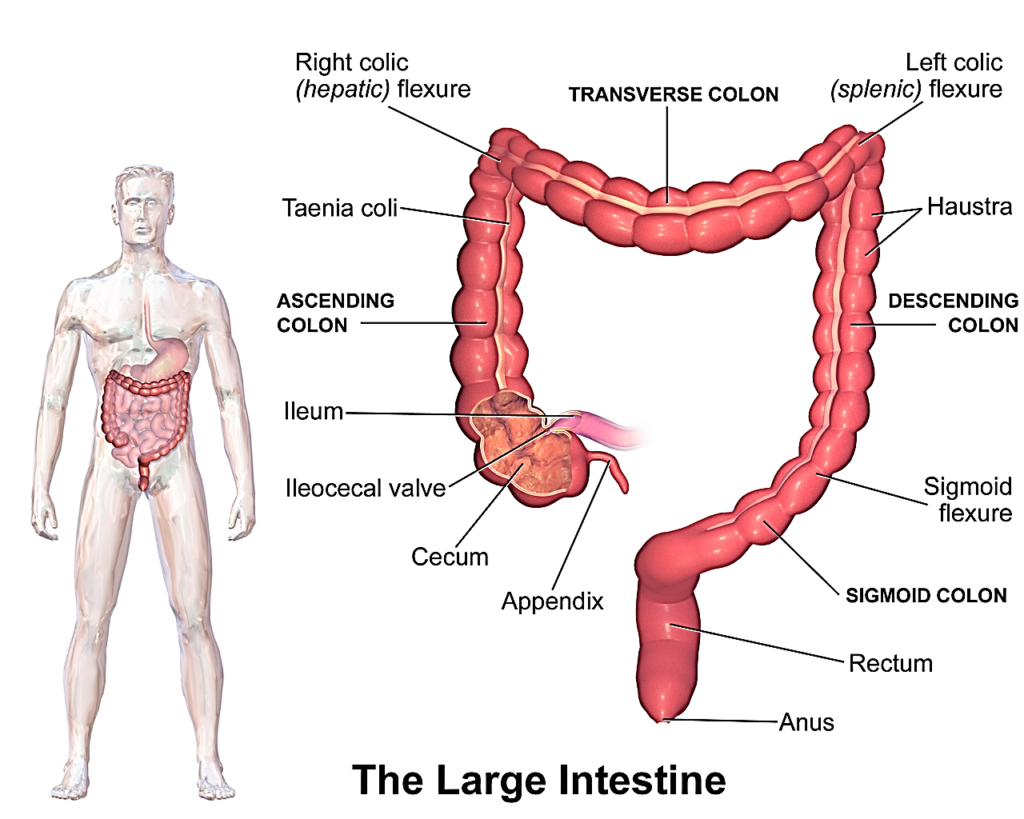
A Personal Screening Conundrum
“Hi. I’m from Dr. X’s office. We have your Cologuard screening test results. It’s positive.” “Oh,” I paused, “and what does that mean?”
“That’s all I know now. Dr. X will contact Dr. Y to schedule a colonoscopy.”
Those were not reassuring words. Uncertain of my medical status, I consulted the website of the screening kit’s provider and scrolled through the FAQs. Those referred me to a paper by Thomas Imperiale, MD 5 (Indiana University School of Medicine) which clarified the issue: Although often presented as a screening test for colon cancer, it’s really an initial screen for colon abnormalities which could indicate a cancer. In an average risk for colon cancer population (N = 10,000) between the ages of 50 and 84, 16% of individuals screened by this method were positive–like myself. Those positives were referred for immediate colonoscopies: 4% were diagnosed with colon cancer, 51% had colonic polyps and the remainder were non-cancerous cases — cause unknown5. I felt better but was still somewhat miffed by a non-medically trained individual earlier giving me the news! My subsequent colonoscopy by a veteran gastroenterologist went smoothly: He surgically removed two polyps from different areas of my colon and send them off for a biopsy. Pathologists later confirmed this tissue as “not atypical”. I was in the clear.
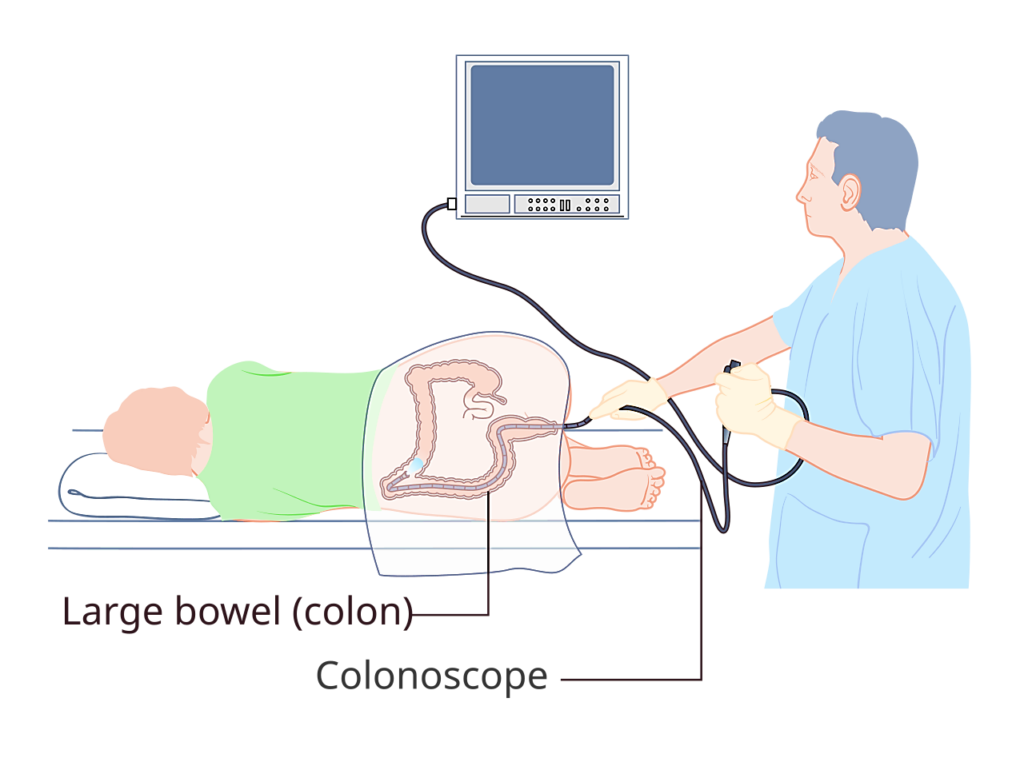
colonoscope, inserted through the anus, to examine patient’s empty colon.
Source: Cancer Research UK https://commons.wikimedia.org/w/index.php?curid=34332993
In-home Screening Kits: A Useful First Step
Unlike earlier immunochemically based stool tests like FIT or FOBT, the Cologuard Screening Test5 (Exact Sciences Corporation) uses analysis of stool DNA (sDNA). It is commercially well-marketed and considered a breakthrough in the colorectal screening enterprise. Those patients who use it, however, need to understand what it can and cannot do. The in-home stool screening test does not definitively diagnose colorectal cancer but tells you whether or not you merit a colonoscopy which can accurately diagnose such a cancer.
Cologuard5,6,8 analyzes stool DNA (sDNA) biomarkers to monitor disorders within the colon. A “next generation” test (Cologuard Plus) has been approved by the FDA and is currently under clinical evaluation. Applying a new panel of molecular biomarkers, its early use indicates that, relative to the original Cologuard test, high sensitivity was maintained with a decline in the number of false positives that would cause unnecessary colonoscopies.7,8,9 That’s a significant issue for elderly patients who tend to be at higher risk for complications from a colonoscopy.8
Those in the medical testing business often market their products to physicians with the clinical categories of sensitivity and specificity. Sensitivity identifies accurately every case of the disease. (100% sensitivity refers to a test that has zero false negatives.) Specificity identifies accurately every case lacking the disease. (100% specificity refers to a test that has zero false positives.) Realistically, it would be a very rare medical test that had both 100% sensitivity and 100% specificity. But the closer the test comes to that, the better for the patient. Cologuard reports the specificity and specificity for identifying colorectal cancer are reported as a result of both the kit’s usage followed by colonoscopy confirmation. Therefore, sensitivity of the assay was reported to be at least 92%, significantly higher than those earlier FIT or FOBT assays.5, 7, 8
Making Informed Decisions & Current Screening Recommendations
The American Cancer Society and the American Medical Association would be delighted if everyone 45 and older reported faithfully every 3 years for a colonoscopy. Of course, this is quite unrealistic. The inconveniences of colonoscopy make compliance an issue. Encumbrances include the dreaded “day of preparation” in which your colon is emptied using powerful laxatives; the cost of the procedure; sedation; support persons needed for transport, etc. The utility of an in-home non-invasive screening test that is mailed out for analysis fulfills a great need. Therefore, who is and who is not eligible for properly utilizing such a test?
Guidelines:
The following individuals would not benefit from an in-home screening test 6,7,8 These include those who have…
- a history of colorectal cancer or any other cancer of the digestive system.
- a family history of colorectal cancer.
- a history of inflammatory bowel disease (IBD) – Crohn’s disease or ulcerative colitis.
- familial adenomatous polyposis (FAP)* or with a family history of it.
- been diagnosed with Lynch syndrome** or with a family history of it.
- a previous positive in-home screening test.
- had prior radiation therapy in the abdominal or pelvic areas.)
- reached 75 years of age 6 (deferred only at the discretion of their physician).
*FAP refers to the presence of hereditary precancerous polyps proliferating in the colon. They very frequently progress into a cancer10 and can be surgically removed during a colonoscopy.
**Hereditary genetic disorder that can cause nonpolyposis colorectal cancer (HNPCC)
- If you are eligible as an “average risk” patient, first see your healthcare provider who will also facilitate ordering an in-home screening kit. [This article has highlighted the results of only one commercial kit (Cologuard) available. Others are in the process of coming onto the clinical market. Consult your healthcare provider as to their efficacy.]
- Everyone 45 years or older among the eligible should be screened.1 Earlier ages should be screened at the discretion of their physician.
- Persons of African-American, Alaskan Native or Eastern European Jewish descent should also inquire of their physician any special criteria for their screening.11
- Medicare Part B and many private insurers will cover the cost of an in-home screening kit.6,9
References
- American Cancer Society Colorectal Cancer Facts & Figures 2023-2025;
http://www.cancer.org/research/cancer-facts-statistics/colorectal-cancer-facts-figures.html - Connell, L, Mota, J, Braghiroli, M et al. The rising incidence of younger patients with colorectal cancer. Curr Treat Options Oncol 2017;18(2):23
- Teng, A, Nelson, D, Dehal, A et al. Colon cancer as a subsequent malignant neoplasm in young adults. Cancer 2019; 125(21):3749-3754
- Mauri, G, Patelli, G, Crisafulli, G et al. Tumor “age” in early-onset colorectal cancer. Cell 2025; 188:589-593.
- Imperiale, T, Ransohoff, D, Itzkowitz, S et al. Multitarget stool DNA testing for colorectal cancer screening. N Eng J Med 2014; 370:1287-1207
- Dwyer, A, What is the best way to screen for colorectal cancer?; Conquer: the journey informed; Vol. 10, No. 1; February 2024; https://conquer-magazine.com/topics/colon cancer
- Exact Sciences Corp.; What is the Cologuard PlusTMTest? https://www.cologuard.com/
- Imperiale, T, Porter, K, Zella, J et al. Next-generation multitarget stool DNA testing for colorectal cancer screening. N Eng J Med 2024; 390:984-993
- Schoenfeld P, Multi-target stool DNA test for CRC screening: how accurate is the new version? https://gi.org/journals-publications/schoenfeld_May2024/
- Johns Hopkins School of Medicine. https://www.hopkinsmedicine.org/health/conditions-and-diseases/familial-adenomatous-polyposis
- Johns Hopkins School of Medicine. https://www.hopkinsmedicine.org/health/conditions-and-diseases/colon-cancer